Did you know that a single ounce of pork belly contains about 250 calories and 19 grams of fat? This rich, flavorful cut of meat is a culinary powerhouse, but it’s often confused with its more famous cousin, bacon.
While both come from the same part of the pig, pork belly and bacon are distinct ingredients with unique characteristics and best uses in the kitchen. Understanding these differences can elevate your cooking and help you choose the right cut for your desired dish.
What Exactly is Pork Belly?
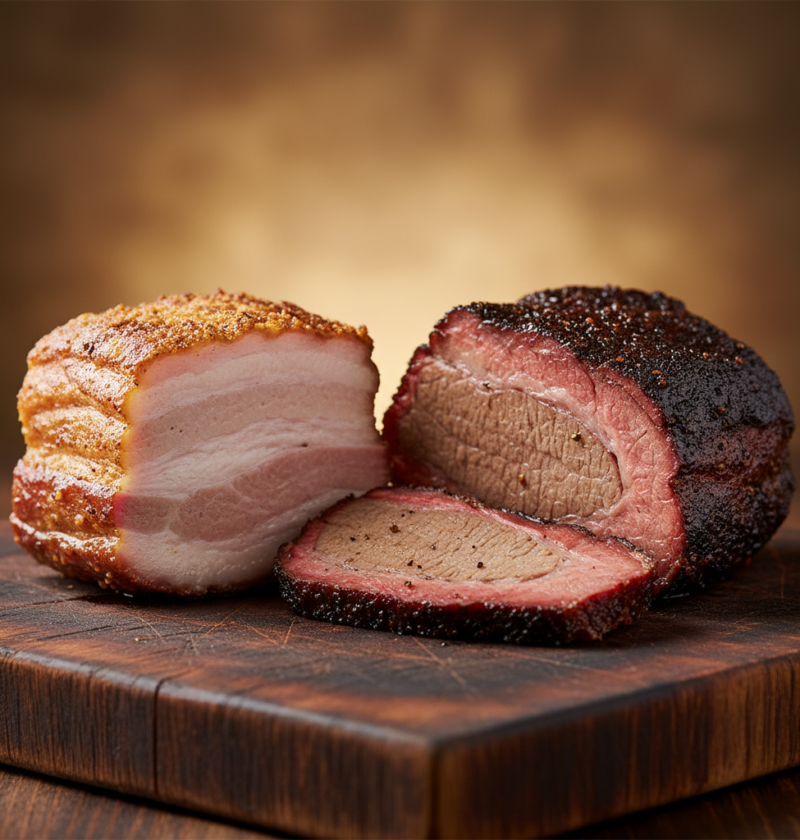
Pork belly is a fatty, unsmoked, and uncured cut of pork that comes from the underside of the pig. It’s known for its high fat content, which melts during cooking, rendering it incredibly tender and flavorful. It’s a versatile ingredient that can be prepared in numerous ways, from slow-roasting to braising. In many Asian cuisines, pork belly is a star ingredient. For instance, Chinese braised pork belly (Hong Shao Rou) is a beloved classic, showcasing the meat’s ability to become melt-in-your-mouth tender when simmered in a savoury sauce.
What is Bacon?
Bacon, on the other hand, is cured and smoked pork belly. The curing process typically involves salt and sometimes sugar, nitrates, and other flavourings. The smoking process imparts a distinct smoky flavour that is characteristic of bacon. This processing makes bacon more shelf-stable and gives it its signature crispy texture when cooked. The National Pork Board notes that curing and smoking are essential steps in transforming raw pork belly into bacon.
Key Differences Summarised
| Feature | Pork Belly | Bacon |
|---|---|---|
| Curing | Uncured | Cured (salt, nitrates, etc.) |
| Smoking | Unsmoked | Smoked |
| Flavor | Rich, porky, adaptable to seasonings | Salty, smoky, savoury |
| Texture | Can be tender, crispy, or chewy depending on preparation | Typically crispy when cooked |
| Preparation | Roasting, braising, frying, grilling | Frying, baking, grilling |
Best Uses in Meals
The distinct characteristics of pork belly and bacon lend themselves to different culinary applications.
Culinary Uses for Pork Belly
Because it’s uncured and unsmoked, pork belly offers a blank canvas for a wide range of flavours. Its high fat content makes it ideal for dishes where you want a rich, succulent result.
- Roasting: Slow-roasting pork belly until the skin is crispy (like crackling) and the meat is tender is a popular method. This is common in dishes like Crispy Pork Belly from Serious Eats.
- Braising: As mentioned, braising pork belly in liquids like soy sauce, wine, or broth results in incredibly tender meat, perfect for serving with rice or noodles.
- Grilling: Thick slices of pork belly can be grilled to achieve a smoky char and tender interior.
- Sous Vide: This technique allows for precise temperature control, ensuring a perfectly cooked, tender pork belly every time.
Culinary Uses for Bacon
Bacon’s cured and smoked nature means it brings a ready-made flavor profile to dishes. Its ability to crisp up makes it a versatile ingredient for adding texture and savory notes.
- Breakfast Staple: The most common use is undoubtedly for breakfast, served alongside eggs and toast.
- Flavor Enhancer: Bacon bits are fantastic sprinkled over salads, soups, and baked potatoes.
- Sandwiches: A BLT (Bacon, Lettuce, Tomato) is a classic for a reason.
- Wraps: Wrapping other foods, like asparagus or dates, in bacon before cooking adds a delicious salty-sweet element.
- Sauces and Soups: Rendered bacon fat can be used as a flavorful base for many dishes, and chopped bacon adds depth to sauces and soups.
Nutritional Considerations
Both pork belly and bacon are high in fat and calories. According to the U.S. Department of Agriculture (USDA) FoodData Central, a 3-ounce serving of pan-fried bacon contains around 130 calories and 10 grams of fat, while the same amount of pan-fried pork belly can have closer to 450 calories and 45 grams of fat, due to its higher fat content before processing. Moderation is key when incorporating these rich ingredients into your diet.
Conclusion
While both pork belly and bacon originate from the same cut of pork, their preparation methods lead to significant differences in flavour, texture, and culinary applications. Pork belly offers a rich, unadulterated pork flavour that shines when slow-cooked or roasted, while bacon provides a salty, smoky punch that enhances a wide array of dishes. By understanding these distinctions, you can confidently select and prepare these delicious ingredients to achieve your desired culinary results.