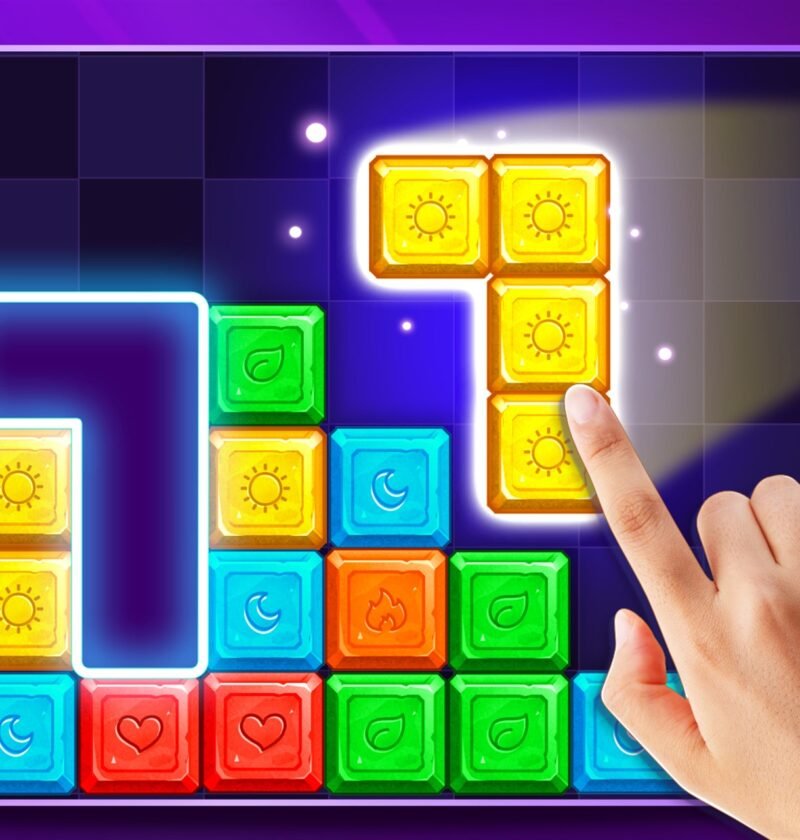
Did you know that the simple act of stacking blocks has been a source of joy and learning for children for centuries? From the earliest wooden toys to the complex digital challenges of today, block games have undergone a remarkable evolution. This journey reflects not only technological advancements but also our ever-growing understanding of how play fosters development.
The Tangible Beginnings: Wooden Blocks and Early Play
For generations, wooden blocks were the quintessential toy. These simple, often geometric shapes, allowed children to explore concepts like gravity, balance, and spatial reasoning through hands-on manipulation. Building towers, creating imaginary structures, and even knocking them down were all part of the learning process. This tactile interaction is crucial for developing fine motor skills and understanding physical properties. Early block sets were often made from natural materials, emphasizing durability and simplicity.
The Rise of Construction Sets: More Than Just Stacking
As manufacturing techniques advanced, so did block games. The introduction of interlocking blocks, like those pioneered by companies in the mid-20th century, revolutionized play. These systems allowed for more complex and stable constructions, encouraging creativity and problem-solving. Children could design and build vehicles, buildings, and fantastical creations, fostering a deeper engagement with engineering and design principles. This shift marked a move from simple stacking to intricate building.
Digital Blocks: A New Dimension of Play
The digital age brought block games into the virtual realm. Early computer games and later, mobile applications, adapted the core concepts of block manipulation into interactive experiences. Games like Google Block Breaker offer a modern take, transforming the static nature of physical blocks into dynamic challenges.
These digital versions often incorporate elements of logic, strategy, and quick reflexes, providing a different, yet equally valuable, form of cognitive stimulation. The ability to undo mistakes, reset levels, and experience instant feedback are hallmarks of this digital evolution. Exploring these games can be both fun and mentally engaging, offering a new way to interact with block-based challenges.
Benefits of Digital Block Games
Digital block games continue to offer significant developmental benefits. They can enhance problem-solving skills, improve hand-eye coordination in a virtual context, and introduce concepts of algorithmic thinking. The visual and auditory feedback in these games can make learning more engaging for a new generation. Understanding how these games work can also provide insights into the broader world of technology and programming.
The Enduring Appeal of Blocks
From the simplest wooden cube to the most sophisticated digital puzzle, block games have always tapped into a fundamental human desire to create, build, and solve. They adapt to new technologies while retaining their core educational value.
Whether physical or digital, the act of arranging and manipulating blocks remains a powerful tool for learning and development, proving that some classic ideas are timeless. The continued innovation in this space, as seen in various online gaming platforms and educational apps, ensures that block games will remain relevant for years to come.
Frequently Asked Questions
What are the main developmental benefits of playing with blocks?
Playing with blocks helps develop fine motor skills, hand-eye coordination, spatial reasoning, problem-solving abilities, and creativity.
How have block games changed with technology?
Block games have moved from physical toys like wooden blocks to interlocking construction sets, and now to digital versions on computers and mobile devices, incorporating interactive elements and complex challenges.
Are digital block games as beneficial as physical ones?
Digital block games offer different but complementary benefits, such as enhanced problem-solving through logic puzzles, improved reaction times, and exposure to digital interfaces, while physical blocks excel in tactile development and gross motor skills.
What makes block games so timeless?
Their enduring appeal lies in their simplicity, versatility, and inherent ability to foster creativity, logical thinking, and a sense of accomplishment through building and problem-solving, which are fundamental human drives.