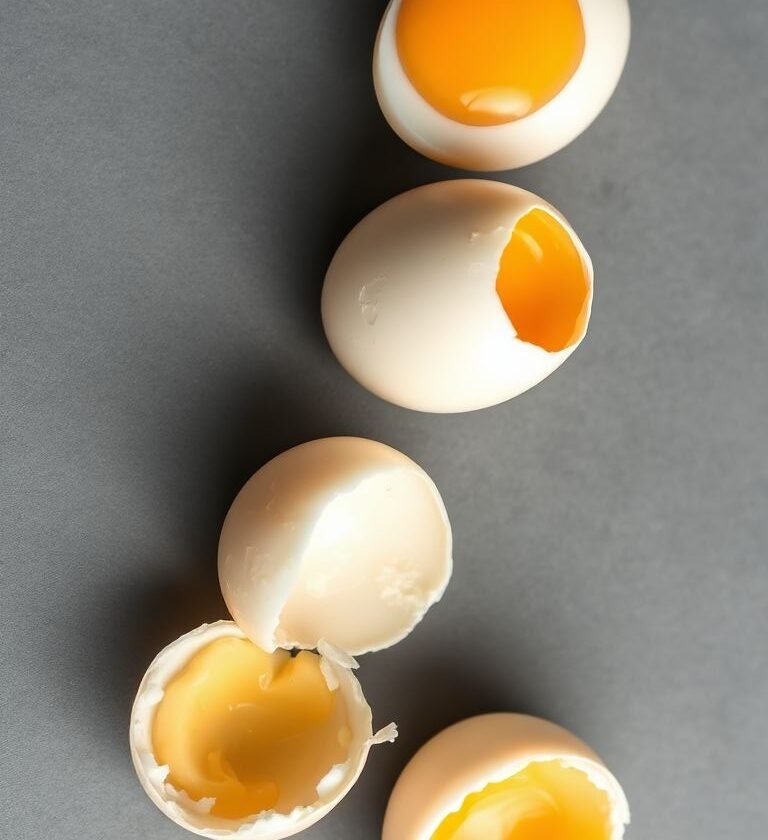
Many folks think boiling an egg is just dropping it in hot water and waiting. But that’s not true. The time you cook it changes everything, from a gooey centre to a solid one. This article breaks down the four main types of boiled eggs. We’ll look at how to make each one right.
Boiled eggs fit into so many meals. Think salads, sandwiches, or quick snacks. Picking the best type makes your dish shine. Get it wrong, and your recipe falls flat. Let’s dive in and sort this out.
The Spectrum of Doneness: Defining the Four Primary Boiled Egg Categories
Boiled eggs come in four key types. Each hinges on the yolk’s feel. Timing sets the stage for texture and taste. Know these, and you’ll nail any boil.
The Runny Yolk: Soft-Boiled Eggs (The Dipping Delight)
Soft-boiled eggs have a liquid yolk that spills out like warm butter. The white sets just enough to hold it together. This makes them great for dipping toast soldiers.
Cook them for 4 to 6 minutes in simmering water. Start with eggs straight from the fridge for best results. Search for soft-boiled egg time if you want exact tweaks. That runny yolk adds richness to simple breakfasts. It’s pure joy when you crack it open.
The Custardy Centre: Medium-Boiled Eggs (The Perfect Compromise)
Medium-boiled eggs offer a jammy yolk. It’s semi-liquid, thick, and holds a bit of shape. The white stays firm but tender. This type shines in modern dishes.
Aim for 7 to 8 minutes of boiling. Pull them out, and the centre stays moist without running. Try a jammy egg recipe on avocado toast. It blends creamy and bold flavours. Medium boiled eggs suit busy cooks who want something special.
The Firm Foundation: Hard-Boiled Eggs (The Classic Staple)
Hard-boiled eggs feature a fully cooked yolk. It’s solid and crumbly, with a firm white around it. No mess, just reliability for everyday use.
Boil for 10 to 12 minutes to get there. Watch out for overdoing it, or you’ll see that ugly green ring. Learn how long to hard-boil eggs for foolproof batches. The firm yolk egg stands up in salads or as a snack. It’s the go-to for meal prep.
The Overcooked Caution: Examining Over-Hard Eggs
Over-hard eggs happen when you go past 13 minutes. The yolk turns chalky and dry. A grey ring forms from sulfur buildup. Most people skip this type on purpose.
It starts as a hard-boiled egg but gets ruined by extra heat. The texture feels tough, not creamy. Avoid it unless you like a very dry bite. Stick to shorter times for better eats.
Precision Timing and Temperature: Achieving Consistency
Getting the same result every time takes care. Water temp and egg start matter a lot. Master these steps for eggs that wow.
Starting Methods: Cold Water vs. Boiling Water
Cold water start means room-temperature eggs in a pot of cool water. Bring it to a boil slowly. This cuts the cracking risks. Add a splash of vinegar or salt to help shells stay put.
The boiling water method drops eggs into already hot water. It gives tight control over time. Use a spoon to lower them in gently. Both work well. Pick based on your kitchen setup.
- Cold start: Gentler, fewer cracks. Good for beginners.
- Boiling start: Faster, precise. Ideal for soft-boiled egg time.
The Crucial Role of the Ice Bath (The Stop Button)
An ice bath shocks the eggs cold right after boiling. It stops the heat from cooking more inside. Without it, soft or medium types turn hard fast.
Fill a bowl with ice and water. Plunge eggs in for 5 minutes. This keeps yolks just right. It’s key for runny yolk dreams. Skip it, and you’ll regret the overcooking.
Altitude Adjustments and Egg Size Variables
High up, water boils at lower temps. Add a minute or two for every 1,000 feet above sea level. Test with one egg first.
Egg size shifts things, too. Large ones take the standard time. Small ones need less, jumbos more. Use large eggs for easy recipes. Adjust for your bunch.
More boiled Eggs: Ajitama
Utility and Application: Matching the Egg Type to the Dish
Each boiled egg type fits certain foods. Match them right, and meals level up. Let’s see where they shine.
Soft-Boiled Eggs: The Breakfast Table Essential
Soft-boiled eggs make breakfast fun. The runny yolk drips over toast or veggies. Serve in an egg cup for that classic look.
Pair with soldiers—thin bread strips for dipping. It’s a quick win for mornings. That liquid centre acts like a sauce. No need for extras.
Medium (Jammy) Eggs: Elevating Modern Classics
Jammy eggs add flair to bowls and noodles. Slice one over ramen for a creamy boost. Inspired by Japanese ajitama, they’re a hit.
Toss into grain salads or poke bowls. The semi-soft yolk mixes in smoothly. Medium boiled eggs bring comfort with style. Try them halved on toast with greens.
Hard-Boiled Eggs: Storage and Structural Integrity
Hard-boiled eggs hold up for days in the fridge. Chop them into egg salad or deviled treats. They’re perfect garnishes for soups.
They last up to a week, peeled or not. Use for snacks on the go. The firm structure means no fuss. Great for batch cooking.
Troubleshooting Common Boiled Egg Failures
Eggs can go wrong fast. Cracks, rings, sticky shells—these fix easily. Let’s tackle the usual woes.
Preventing the Dreaded Green Ring on Hard-Boiled Yolks
The green ring comes from iron and sulfur mixing in the yolk. It happens with too much heat or slow cooling. Iron sulfide builds up quickly.
Cool eggs in ice water right away. This kills the reaction. Boil just 10 minutes max. No more ugly discolouration. Your hard-boiled eggs stay pretty.
Strategies for Easy Peeling
Fresh eggs stick like glue. Older ones peel smoothly thanks to air pockets. Let eggs age for a week in the fridge.
Steam instead of boiling for looser shells. Or hit that ice bath hard. The cold shrinks the egg from the shell. pH rises with age, helping too. Say goodbye to torn whites.
Why Do My Eggs Keep Cracking While Boiling?
Eggs crack from sudden heat shocks. Cold eggs in hot water expand too fast. Bring them to room temperature first.
Lower gently with a spoon. Try a pin prick in the shell’s base for air escape. Or use poacher cups for soft types. These tricks keep shells whole.
Conclusion: Mastering Your Morning Meal and Beyond
The four types—soft, medium, hard, and over-hard—form a clear line. Time controls it all, from runny yolk to chalky mess. Grasp this, and eggs become your kitchen ally.
No more guesswork in boiling. Experiment with times to find your fave. Start simple, then tweak for height or size. You’ll craft perfect boiled eggs every time. Grab some eggs and boil away. Your next meal waits.